The Ultimate Character Cheatsheet: How to Make your Own Magical Index Card within 5-10 Minutes!
- Shancurty Ignacio
- Mar 4, 2025
- 3 min read

Updated: Mar 13, 2025
Have you ever wondered how a simple piece of index card or paper can magically transform your boring characters into memorable and relatable ones? Worry not—I’ve got a “magic” formula for you. Welcome to my humble writing wiz workshop, where I show you how to create literal “magic” with your characters.
Disclaimer: This is a shorter version of what the writing community calls the “Character Profile.” Mine's shorter and, let’s say, portable. You can carry this around during your writing sessions and use it to your advantage. My only advice is—don’t lose it or leave it behind. This index card or paper is your cheat sheet for writing a specific character in your story, aka your MC. Think of it as your character’s little “brain.” (Funny, I know, but it’s effective for me!)
If you're still reading and want to know how to make one, then stick around!

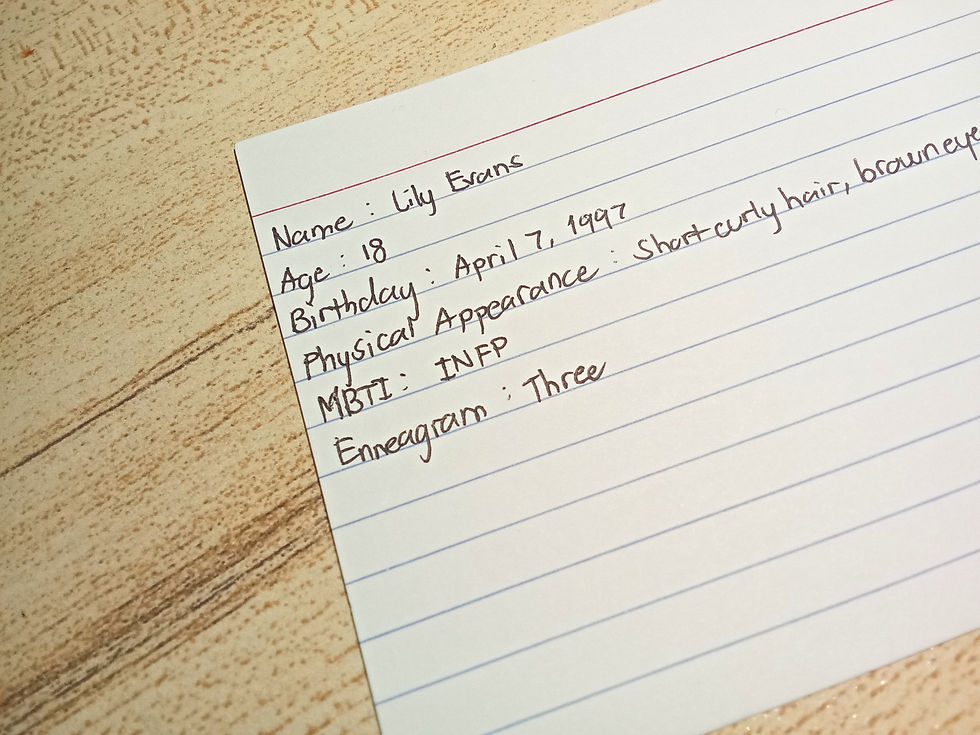
Get an Index Card: Small is advisable. Write your character’s name, age, birthday, and physical appearance. Only include the important details.

Here's mine! This character is random...or maybe not. smirks Note: You can make multiple index card profiles for different characters! Number your cards just in case things go haywire! (I hate people who lose or forget things. Keep things in order and don’t be a total sloth!)
MBTI Type and Enneagram: Write these down after taking the quizzes. They’re very important. If you already know your character's MBTI and Enneagram, you don't need to take the quiz again.
Optional: Include “BIG 5”, “Moral Alignment”, and “Temperament” sections. These are helpful but not essential.
Character’s WANT, FEAR, and MISBELIEF: Very, VERY important.
My Cheat Code:
WANT: What the character wants to achieve in life and what will bring them joy.
FEAR: What the character is afraid of. Remember, this doesn’t have to be a physical thing. Think internally.
MISBELIEF: What your character believes is a lie in their world. For example, “I’m always unlucky because I was born poor”.
Note: This misbelief will be your story’s theme—the overall message of your book. Example: “Anyone can be lucky in life, regardless of whether they are born rich or poor”.

Character Voice: Take note of how the character speaks and describe it (internally and externally). Include common words, speech patterns, and anything else important to note about their speaking voice or internal thoughts.

Optional Step: Draw or stick your character’s photo on the index card. If you're not an artist, don’t worry about it.
Q: Hey, Shan! Isn't the description section enough to tell me what the character looks like?
A: It's best to also see what the characters look like physically to envision them well. This step is optional. Just don't blame me if you ever lose or forget some characters’ appearances…
Kidding aside, now that we’ve completed all the details, it’s time to get the magic working!
Using the Magical Index Card Cheatsheet:
First, look at your character’s Enneagram. Say, for example, you wrote down Enneagram One. Check this website for that specific Enneagram: Enneagram Institute
You’ll learn about that specific Enneagram’s basic fear, beliefs, and desire. These are VERY important when creating a character, so make sure to use this website to your advantage. You can write these information at the back of the index card for reference, think of it as your guide or roadmap for your character. Do the same for the MBTI types. Check this website: 16 Personalities

Enneagrams and MBTIs are an easy way to become any of your characters. If you're not like your character, these tools will guide you on how certain personalities think or believe. Psychology is my forte, and it’s about connecting with people emotionally and acknowledging their fears, beliefs, and wants. Using this index card will assist you in the nitty-gritty of the writing process. But of course, different people have different processes, and you don’t have to do this to write a book!
This magical index card is a shortened, portable version of the lengthy character profiles. If you prefer a more straightforward approach focusing on important internal details, then this tutorial is perfect for you.
I hope you learned something from this quick workshop! Let me know if you have difficulties or suggestions for future posts. I’ll be happy to reply to your comments!


Comments